Saturday, January 16, 2010

Concept car Porsche 911 Turbo TechArt GTstreet Model 997


The cockpit of the TechArt GTstreet also differs distinctly from the stock 911 Turbo. Among the differences is an exclusive leather interior with color-contrasted stitching and sporty CarboBlack highlights. The coupe is further equipped with an ergonomically shaped TechArt sport steering wheel, aluminum foot pedals, foot rest and shifter, as well as with illuminated door sills sporting the TechArt logo.


German TechArt studio will present in Geneva its latest tire-burner based on the current Porsche 911 Turbo 997 series super-coupe. While most tuners focus their efforts on eye-popping exterior enhancements, TechArt’s engineers have centered their attention


With its 2001 TechArt GTstreet, based on the Porsche 911 Turbo of the 996 model series, TechArt created one of the fastest and most powerful street-legal sports cars of its time. The next evolutionary stage of this fascinating concept celebrates its world debut at the Geneva Motor Show 2007. The new TechArt GTstreet, based on the 911 Turbo of the latest 997 series, starts at $320,000. Like the predecessor the new GTstreet edition centers on a powerful engine. The 3.6-liter twin-turbo flat engine is modified by the TechArt engine specialists and now develops 630 bhp at 6,800 rpm, up from standard 480 bhp. Peak torque increases to 605 lb-ft at 4,500 rpm.

Concept car Porsche 911 Turbo TechArt GTstreet Model 997Porsche 911 Turbo TechArt on Back Body

The TechArt GTstreet rear fascia with integrated carbon-fiber diffuser contributes to the strong downforce generated on the rear axle. It also provides the perfect backdrop for the quad exhaust of the TechArt high-performance exhaust system. TechArt Automobildesign offers a number of versions of its popular Formula wheel in sizes 8.5Jx20 in front and 12Jx20 on the rear axle. GTstreet buyers can choose from several color combinations and between the one-piece Formula and the multi-piece Formula II designs. The Formula II wheel features an exchangeable wheel lip. For optimal tires TechArt chose ContiSportContact 3 high-performance tires in sizes 245/30 ZR20 and 325/25 ZR20. The large 20-inch wheels also provide the necessary space for the especially powerful and durable TechArt high-performance brake system. It features six-piston aluminum fixed calipers and 390-millimeter discs on the front axle. The rear axle is fitted with 365-millimeter discs and four-piston fixed calipers. The TechArt GTstreet comes with a TechArt VarioPlus coil-over suspension that is based on the electronically adjustable PASM damping system of the 911 Turbo. This chassis allows individual ride-height lowering by up to 25 millimeters and push-button selection of two different damper settings, “Normal” or “Sport.” However, the dampers are not limited to these presets. Sporty driving automatically results in firmer damper settings in both modes, thus combining excellent ride comfort during normal driving with agile and responsive handling during fast cornering.


The body kit for the TechArt GTstreet was created in the wind tunnel, and offers an optimal symbiosis of aerodynamic down force, minimized drag and striking design. The front fascia of the GTstreet with retractable carbon-fiber splitter produces down force on the front axle and provides radiator, oil coolers and brakes with more cooling air, thanks to its large, striking air inlets. The auxiliary headlamp units with daytime running lights and fog lamps improve active safety. They also give the car even more passing clout. The TechArt GTstreet fender flares on the front axle add 10 mm to the two-door’s width and give it an even more dynamic appearance. But that’s not all: The air outlets behind the front wheel houses optimize brake venting. The larger air ducts in the rear sidewalls provide engine and inter coolers with a larger supply of cooling air. For an optimal transition between front and rear fenders the TechArt designers have developed rocker panels that complement the new contours. TechArt mirror and headlamp moldings provide the finishing touches. The TechArt roof spoiler extends the roof line and optimizes airflow to the adjustable rear airfoil of the GTstreet.

Friday, January 15, 2010

concept car pictures

concept car
concept car
concept car
concept car pictures
concept car gallery
concept car photos
concept car images
concept car pics
concept car wallpapers
mazda concept car

Saab Aero X Concept Car

aab Aero X Concept Car Beautiful Saab Aero X Concept Car Auto Show

Whoops, looks like someone's gotten more than a case of part-skim from the milkman. Check out these pics of the Ford Reflex concept from the Detroit show and the Saab Aero-X, set to debut in Geneva next week, then get Maury Povich on the horn. Somewhere there's a babydaddy short one paternity test. this concept car saab aero x is a design futuristic for future because this design car luxury and modern tecnology for future.
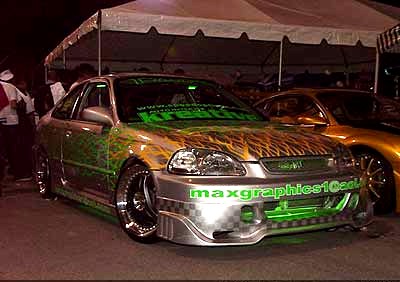
Saab Aero X Concept Car

aab Aero X Concept Car Beautiful Saab Aero X Concept Car Auto Show

Whoops, looks like someone's gotten more than a case of part-skim from the milkman. Check out these pics of the Ford Reflex concept from the Detroit show and the Saab Aero-X, set to debut in Geneva next week, then get Maury Povich on the horn. Somewhere there's a babydaddy short one paternity test. this concept car saab aero x is a design futuristic for future because this design car luxury and modern tecnology for future.

Wiesmann GT Concept Car

Wiesmann GT Concept CarWiesmann GT Concept Car on Back Body


The latest to emerge from German sports car marque Wiesmann is news on the hand-built GT MF5 sports car. Loosely based on the previous MF4 coupe, the new MF5 will feature a 500 hp BMW-sourced M5 V10 engine and seven-speed SMG gearbox to offer blistering performance - try 0-100 km/h in 3.9 seconds and a top speed in excess of 300 km/h!

Wiesmann GT Concept CarWiesmann GT Concept Car in the Front


This Car Wiesmann GT a design concept car for future because this car looks modern and luxury car. The success of the Roadster concept is based on a successful synthesis of classic design and state-of-the-art engineering. This encouraged Friedhelm and Martin Wiesmann to develop a new, similarly fascinating, sports car on the basis of the Roadster, the Wiesmann GT. The two-seater coupé celebrated its premiere as a production vehicle at the IAA 2005 in Frankfurt, to be acclaimed by the motoring experts.

Despite the suggestions of a classic design as a further development of the Wiesmann-Roadster it was a completely new car which was created. Basic data were gained from the Wiesmann Racing GT, which was tested as a experimental vehicle under extreme conditions during the 24-hour race at the Nürburgring in 2002. Since it was clear from the outset that this vehicle would not only be optically different, but based on different fundamental data, from the Roadster, there was plenty of room for manoeuvre in the development. Starting point for considerations was the engine. This was to represent a new sparkle, come what might.

Since, as it is well known, displacement can only be replaced by one thing, and that is more displacement, thoughts quickly made friends with the idea of using a BMW V8 engine of 4.8 litres capacity. This made a larger engine compartment than the Roadster's essential, which consequently meant that all the dimensions of the Wiesmann GT would have to be oriented towards that. Thus, the GT grew in all directions, compared with the Roadster: it was three centimetres higher, eleven wider, and no less than 37 longer. To take account of the rather higher fuel consumption of the larger engine, 10 litres additional fuel tank volume was provided, at 70 litres, to guarantee adequate range on longer journeys.

The challenge now facing the engineers was to convert the engine's output into vehicle dynamics. Normally, a larger vehicle also weighs more, which in turn adversely affects the performance figures. This was avoided by designing an aluminium monocoque, familiar from the racing scene. In this way, the increase in weight was kept within bounds, and at 70 kg was extremely modest for a car of this size. The bodywork is of lightweight, high-quality, fibreglass-reinforced compound material and in the familiar manner is also fabricated in the factory. The xenon headlights ensure good visibility in darkness, and the rear lights, which consist of LEDs, not only give a clear signal but are also unmistakable as the hallmark of the Wiesmann GT even at night.

With a power-to-weight ratio of 3.41 kg/HP the Wiesmann GT is to be found in the leading group of sports cars. The low centre of gravity, the perfectly-tuned running gear combined with the bullish torque delivered by the engine, the optimum seating position for driver and passenger ensure unalloyed driving enjoyment. The Wiesmann GT is an individual sports car with a classic design, which fits perfectly in the automotive landscape and which will capture its own niche.

Toyota's radical Compact Sports & Specialty Concept Car


Toyota's radical Compact Sports & Specialty Concept Car
Toyota's radical Compact Sports & Specialty Concept Car on Body


This design car toyotas radical compact sports and specialty looks simple car modern for future. i think this concept car toyota is very futuristic car. A radical Toyota sports car featuring a hybrid petrol-electric drive-train and a host of innovative interior features was one of the stars of the media day at the 2005 Melbourne International Motor Show. The CS&S (Compact Sports & Specialty) concept was designed to demonstrate the sporting potential of Toyota's Hybrid Synergy Drive technology, as featured in the second-generation Prius production car. With its midship-mounted next-generation Toyota Hybrid System THS II based on the Hybrid Synergy Drive concept and an E-Four (electric 4-wheel drive) system, the CS&S is designed to provide outstanding environmental performance and driving exhilaration.

In the CS&S a mid-mounted 1.5 litre petrol engine drives the rear wheels while the 50kW high-output motor electric motor drives the front wheels. The arrangement gives the CS&S the extra traction of four wheel drive combined with vigorous acceleration thanks to the high torque characteristics of the electric motor. Four-wheel control provided by the E-Four system and the midship positioning of the hybrid power plant further enhance handling and road-holding performance. Toyota says the CS&S will accelerate to 100 km/h in 8.6 seconds. Despite the quick performance, the concept car's Hybrid Synergy Drive uses less fuel and has lower exhaust emissions than an equivalent conventionally-engined sports car.

The CS&S's innovations extend to the interior which features a revolutionary human-machine interface called Toyota Space Touch (TST). The TST system uses a series of holographic projections which the driver "touches" to control functions such as air conditioning, audio, satellite navigation and email. The car's seating system is flexible, allowing the CS&S to be converted from a two-seater to a 2+2 by the removal of canopies behind the two front seats. In addition, the front passenger seat has been designed in such a way that it can be rotated to cover the entire cockpit area like a hard tonneau cover, thereby boosting anti-theft security


Thursday, January 14, 2010

2010 Toyota Land Cruiser Prado


2010 Toyota Land Cruiser Prado is the current Prado 4WD was once a great budget buy. With options, nowadays it costs as much as Dhs 170,000, which is insanity for a non-luxury-badged vehicle that hasn’t changed much since 2002. We can only imagine what the new one will go for, assuming Toyota beats the recession and launches a new version. The Land Cruiser V8’s more compact 3-door and 5-door siblings which are known in many markets as the Land Cruiser Prado (not sold in the States) have been photographed undisguised. 2010 Land Cruiser but we suspect that Toyota may also have refreshed the luxury off-roader’s interior. In most markets, the current generation Land Cruiser Prado is available with a choice of two powertrains, a 4.0-liter V6 petrol engine producing 249 horsepower and a 3.0-liter four-banger turbo diesel that cranks out 173 horsepower.Have fun for all driver,....

2009 Toyota iQ Pictures


2009 Toyota iQ. The new Toyota Urban Cruiser is designed to meet a growing demand for vehicles that are cut out for life on urban roads, yet are equally at home off the beaten trackThe length of the car less than 3 meters. As a power plant on the European Toyota iQ, probably will be used 1 - litre petrol engine.Previously, it was reported that Toyota plans to sell 80,000 in 2009 iQ compacts a year at a price of ? 13 thousand in all European markets.so. be happy for yours.

Fast Cars Pictures

Fast Cars Pictures
Fast Cars Pictures
Fast Cars Pictures
Fast Cars Pictures
Fast Cars Pictures
Fast Cars Pictures
Fast Cars Pictures
Fast Cars Pictures
Fast Cars Pictures

LinkWithin